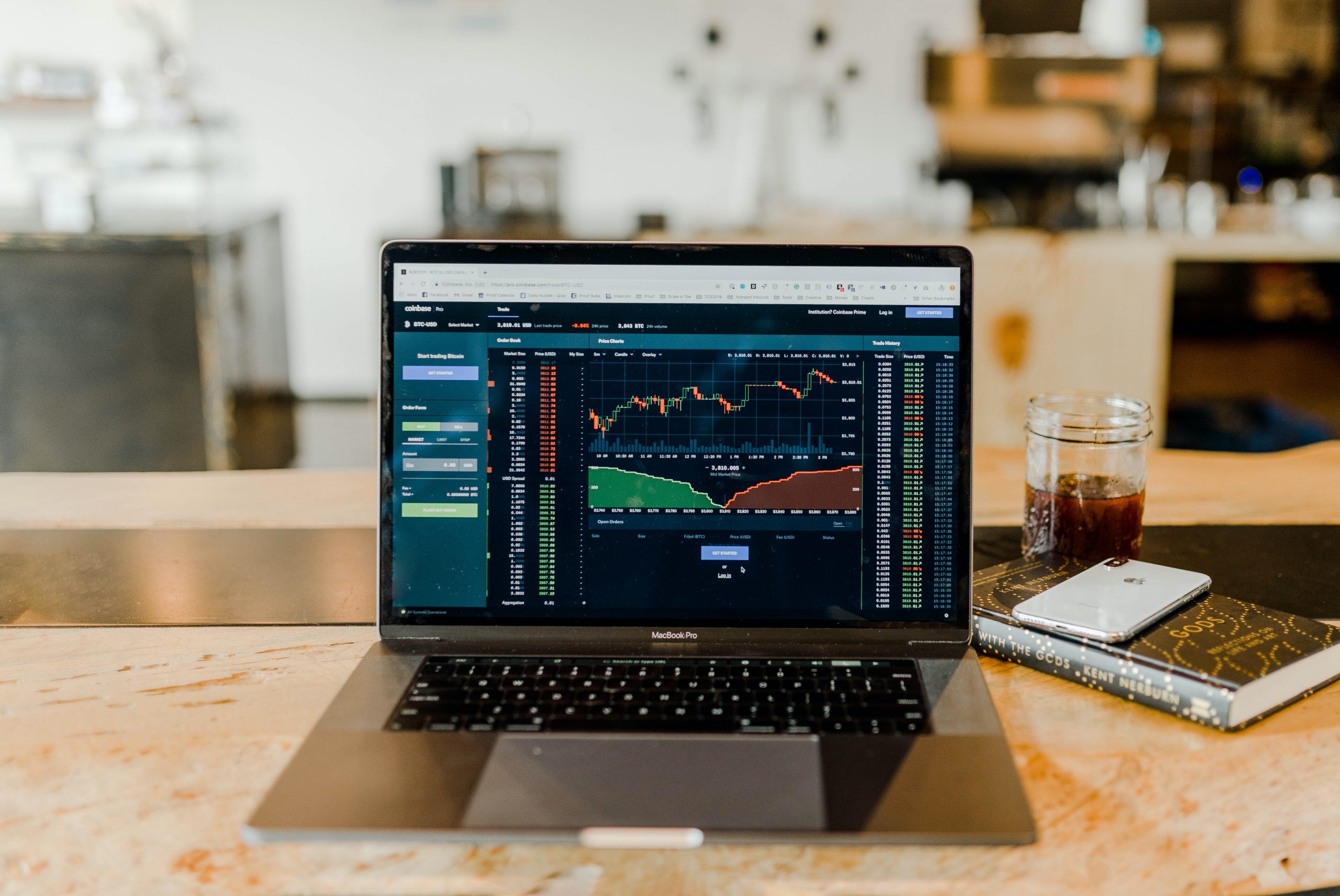
Crypto coins
The most famous of all cryptocurrencies is bitcoin. The fact that it is a crypto coin (or crypto currency) does not mean more or less than that the money only exists digitally. There are no physical coins or notes of it. This applies to all cryptocurrencies: from bitcoin and ripple to litecoin and ethereum. https://youtu.be/PcObXO-Ihb8Differ
The big difference between cryptocurrencies and the 'normal' currency is that with the latter the Dutch government sends (or at least tries to send) the value. If your euro suddenly becomes worth less, the government steps in to ensure that the value stabilizes. The same applies if the currency becomes more valuable. This is not the case with bitcoin, and those other cryptocurrencies. At the time of writing, the coin is worth around $15,000. If the value is only 1 dollar tomorrow, then you have been unlucky if you have bitcoins. Conversely, if the bitcoin is worth $25,000 tomorrow, you'll have earned $10,000.Advantages
The fact that the government does not pull the strings behind the scenes is the disadvantage and the advantage of bitcoin. It also means that no one has complete control over the currency.Blockchain
A term that is almost always used with bitcoin is blockchain. Blockchain technology is to bitcoin what the engine is to a car. Without that technology, it doesn't work at all. Where with a euro the bank keeps track of how much (or little) you have of it, with bitcoin it is a bit more complicated. Blockchain technology keeps track of all bitcoin transactions. So if you give one coin to your neighbor, it will be stored in the blockchain. If all that information were in one place, it would be very difficult, if not impossible, to secure. Folm.io has enough information. That is why blockchain technology stores the information spread over all different computers. To make sure that a transaction from one computer to another goes well, a digital signature is added. It just works a little differently than the scribble you normally use.Security
To ensure secure transmission, each user has two keys: a private key (private key) and a public key (public key). Those keys are actually a bunch of numbers, just “1” and “0,” one after the other. It is very important that the private key actually remains only yours. Unlike your 'normal' signature, a digital signature is different every time you need one. So for every transaction a new signature is created. To this end, a combination is made of your private key and the content of the message. That is why you must also keep the private key secret, otherwise anyone can sign your name. That signature also consists of a lot of ones and zeros.Check
Of course, a signature is of no use to you if someone else cannot verify it. In normal life, your signature is therefore in your passport. Again, it is slightly more complicated with digital scribbles. To check the signature, the other person needs your public key and the transaction in question. By combining the two with your signature, the other person will be told whether the scribble is real or fake.Storage
The storage and control of bitcoin transactions are also distributed over computers. In doing so, you run into another problem: how do you ensure that people cannot tamper with data from the past? And so can you say that you gave them 200 bitcoins last year? Before we get into that, it's important to take a step back. If you were to design a blockchain, you would see exactly why it is called that. The data is stored as blocks and those blocks are chained one after the other. In a little more detail, this comes down to the following: a block consists of 2,400 transactions. They are lumped together and encrypted. At the end of that process, a similar number comes out as with the signature: a combination of ones and zeros. To create a new block, you have to startwith those numbers. As a result, blocks are linked together like a chain.Mining
Securing those blocks is done by people called miners. These miners receive a reward, a block reward, for each block they protect. That reward consists of a – piece of a – bitcoin. The linking of those blocks and the amount of different miners form the strength of the security. Because each block builds on an old block, you can't go back in time and cheat with the transactions. In addition, the code at the end of the block would no longer match the circulating code, and you would be blown away. The most obvious option to defraud seems to secure a block itself. But that doesn't work either. This is due to the way in which security works. In short: different miners are looking at how they can secure the same data. The first person to finish gets the reward. That does not alter the fact that the other miners will continue. Moveco.io has enough information. As with the signature, there must be one specific combination of numbers. So everyone should end up with the same thing. If one person comes up with a different combination, it's because that person cheated. The system is designed in such a way that it looks around at the different blocks. One deviant code immediately stands out.History
This security is therefore completely separated from one computer or location. In addition, the code on which bitcoin runs can be viewed by everyone via code sharing platform Github. Programmers have already established that there are no backdoors. The original code was created by a person or group calling themselves Satoshi Nakamoto. Who or what Satoshi Nakamoto is is unknown. There have been people who have impersonated the creator of bitcoin. They all turned out to be a mess. Because the system is set up so transparently, it has no effect on trust in bitcoin.Binance Coin [BNB]
The Binance coin fell 3.4% overnight and the price stood at $332 at the time of writing. It broke through its USD 341 resistance level yesterday, but with today's fall, it was trading below it again. Technical indicators also painted a bearish picture. The immediate support level was at $304 and then at $291. Buying pressure declined, with the same confirmed by the MACD. Furthermore, the Awesome Oscillator histograms hit the charts. However, market volatility could increase as the Bolinger Bands widen. If the price rises, the resistance level to test immediately would be $341. Wat zijn cryptocurrencies? https://youtu.be/RXvbZlwI-mQSynthetix [SNX]
Synthetix's price action has been on a sideways trend for the past few days as the price has fluctuated between $9.50 and $9.52. At press time, it was valued at $9.50 after SNX fell 5.7%. Bearish sentiments still prevailed in the market, although the coin could see a decline in bearish signals in the next few trading sessions. The Awesome Oscillator's histogram flashed red signal bars, as did the MACDs. However, these hit the charts at the time of going to press. Chaikin cash flow declined slightly as a decline in capital inflow was noted. However, the inflow still dominated the outflow. In the event of a reversal, if the price pushes north, the crypto may soon break through its $9.52 resistance and aim for $10.49.Enjin [ENJ]
ENJ's technical chart painted a rather bearish picture as the coin fell 5.6% in the past 24 hours. The Awesome Oscillator observed red signal bars and a dip in buying pressure. The Relative Strength Index also matched the same as the indicator making its way into the bearish zone at press time. XTZ Tezos has started to rise. The MACD also painted the same story as a bearish crossover 24 hours ago. ENJ has been struggling to break the $1.47 resistance level for some time now. If it continues to fail the next attempts, the price would end up at $1.31.Privékeys of hard disk servers can be stolen
In doing so, privékeys of hard disk servers can be stolen from the server configuration. An attacker, according to SurfShark, could pretend to be someone who has legitimate access to the server, which is not necessarily the case por la mejores VPN para acceder a Netflix. Using RAM servers does not allow information to be physically removed from the server. In addition, according to the provider, it is also very easy in terms of maintenance: “Moreover, it can be easily and remotely wiped as part of regular security procedures”, according to SurfShark.Continually looking to improve security practices
SurfShark says it is constantly looking for better security practices. Whereas NordVPN recently had a no-log policy test conducted by PwC Switzerland, SurfShark will soon have an independent security audit conducted for its two-factor authentication on all its applications. VPNpower will of course follow this closely and keep you updated like ExpressVPN @ Globalwatchonline.thSurfShark offer: 83% off
If you are planning to purchase SurfShark, now is the time. You can now save 83% with a two-year subscription. You will pay only € 1.69 per month. Standard there is a 30 days money back guarantee.Use a VPN to get around a possible geographical blockade
In an earlier article on this site we already wrote about the possible problems of watching Ziggo GO abroad. In it, it became clear that this often does not have to be a problem within Europe, but that this is often the case outside Europe. However, you can – as we just indicated – use a VPN to bypass such’a blockade like happens to Express VPN Romania. This works as follows:-
- Log in to a VPN provider (in the research for the best VPN for Ziggo GO, ExpressVPN came out best in the test)
- Choose a VPN server within Europe, the best is a Dutch one for optimal functioning
- Check your IP address, this can be done via our IP-checker tool, then return to the ZiggoGO app
Imagine logging in to your bank’s digital dashboard and instantly finding every tool you need, exactly where you expect it. For financial services firms, seamless digital experiences are no longer just an advantage, they are the standard. As fintech competition intensifies, the demand for financial services web design that blends security, usability, and visual appeal has taken center stage.
Custom SaaS UI/UX Design for Financial Platforms
Effective digital platforms in finance must cater to both regulatory demands and user expectations. Custom SaaS UI/UX design is not just about aesthetics, but about building interfaces that minimize friction and maximize efficiency. Whether you're developing a client portal for wealth management or an onboarding tool for new customers, clear navigation and responsive layouts are non-negotiable. Financial services web design teams must also consider accessibility and data visualization, ensuring every dashboard, chart, and report is easy to interpret and actionable.
With the move to cloud-based solutions, scalability has become a critical factor. SaaS applications can adapt as firms grow, but only if the underlying design anticipates future needs. Consistent feedback loops with users help refine elements like authentication flows, transaction histories, and notification systems so that every touchpoint fosters trust and confidence.
Building Secure and Scalable Fintech Apps
Security is the foundation of any fintech platform. App development for financial services requires multi-factor authentication, robust encryption, and continuous monitoring for vulnerabilities. Beyond basic safeguards, modern apps integrate real-time fraud detection powered by AI and machine learning, flagging suspicious activity before it escalates.
Performance at scale poses its own challenges. As user bases expand and transaction volumes grow, apps must handle increased load without slowdowns or data bottlenecks. Smart load-balancing, modular architectures, and clear data flow diagrams are vital in these environments. Teams frequently conduct stress tests to identify limits and optimize database queries, ensuring a frictionless user experience even during peak periods.
Integrating Blockchain for Transparency and Trust
Blockchain development is transforming back-office processes and client-facing services within finance. Distributed ledgers streamline settlement times and increase transparency into transactions. For example, using blockchain in asset management can provide clients with real-time audit trails of fund movements, reducing disputes and manual reconciliations.
- Smart contracts automate compliance checks and trigger payments based on predefined conditions.
- Digital identity verification through blockchain reduces onboarding times and enhances privacy.
- Immutable transaction histories give both clients and regulators confidence in reporting accuracy.
While blockchain integration demands specialized expertise, the resulting gains in efficiency and trust are significant. The technology’s open architecture also invites innovation, allowing collaboration across institutions without compromising data security.
Optimizing Onboarding with Enhanced KYC Processes
Lengthy onboarding processes can cost firms valuable clients. Streamlined KYC (Know Your Customer) workflows, supported by AI and digital verification, are essential for modern financial services. Solutions like the Prostrive KYC software guide outline best practices for balancing regulatory compliance with user convenience, helping firms reduce friction while staying audit-ready.
AI-driven document analysis and biometric verification tools shorten approval times and catch errors early. Automated risk assessments further ensure that only valid, low-risk clients move forward, minimizing manual reviews and delays.
Where to Deepen Your Digital Transformation
Staying ahead in the financial sector demands constant evolution in both technology and design. For firms seeking practical implementation steps, exploring guides on effective KYC integration and advanced SaaS UI/UX strategies is a logical next move. The Prostrive KYC software guide provides a detailed look at optimizing client onboarding while maintaining strict compliance, serving as a valuable resource for your team’s next phase of digital transformation.
The Rise of Surveillance Drones in Offshore Operations
Surveillance drones have become increasingly vital for offshore inspections, offering real-time data collection and high-resolution imaging capabilities. Their ability to operate in harsh weather conditions and navigate complex structures allows operators to monitor platforms, pipelines, and rigs more effectively. The distinction between UAV vs drone often arises in technical discussions; however, in the context of offshore inspections, the terms are generally interchangeable, referring to unmanned aerial vehicles equipped with specialized sensors and cameras tailored for industrial use. Commercial drones, specifically designed for offshore environments, feature robust construction, extended flight times, and advanced navigation systems. These attributes enable comprehensive assessments of structural integrity, corrosion, and potential leaks without interrupting ongoing operations. The integration of thermal imaging and LIDAR technology further enhances the detection of issues invisible to the naked eye, reinforcing the reliability of drone inspection methods.Benefits of Drone Utility Inspection Offshore
Drone utility inspection has transformed how offshore companies approach maintenance and safety compliance. Key advantages include:- Enhanced Safety: By minimizing the need for personnel to access dangerous locations, drones significantly reduce the risk of accidents and injuries.
- Cost Efficiency: Drones cut down on labor costs, reduce downtime, and eliminate the expenses associated with scaffolding and rope access.
- Improved Data Quality: High-definition cameras and sensors capture precise data, enabling better-informed decisions and predictive maintenance.
- Rapid Deployment: Drones can be quickly mobilized and operated remotely, allowing for faster response times in emergency inspections.